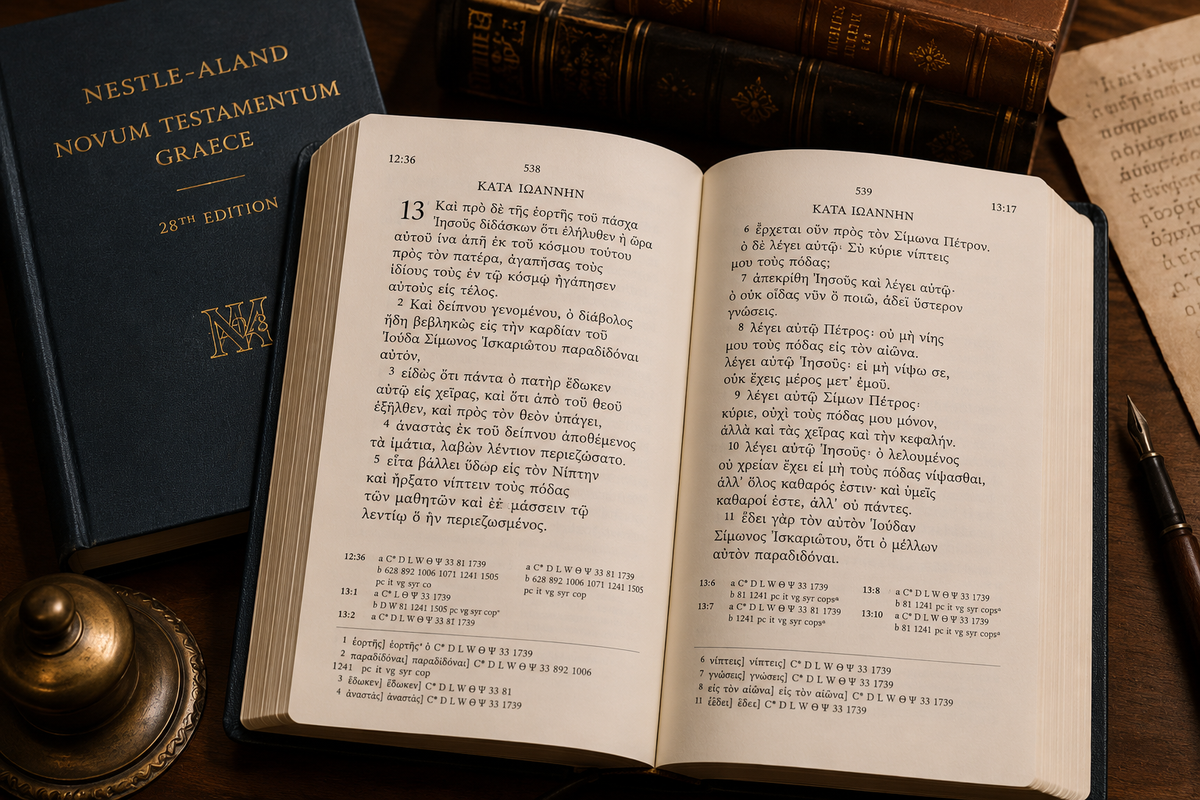
Many churches today continue to affirm the authority of Scripture while increasingly approaching the Bible primarily through personal interpretation, institutional tradition, or pragmatic application. Yet the New Testament repeatedly presents Scripture not merely as religious literature or spiritual reflection, but as the living speech of God mediated through human authors and preserved for the church.
In a newly published theological essay in the Intellectual Foundations series, Dr. Shawn D. Mathis explores how the New Testament understands Scripture as divine speech through the teaching of Jesus, the apostolic witness, and the writings of the early church. The study examines key passages concerning inspiration, authority, and canon while tracing how the New Testament identifies Scripture as Spirit-mediated revelation addressed continually to the people of God.
“The New Testament does not weaken the authority of Scripture by relocating it into human interpretation or ecclesial systems,” said Dr. Mathis. “Rather, it intensifies the claim that Scripture is the living voice of God speaking through written words preserved by the Spirit for the formation and governance of the church.”
The article also examines how modern approaches to biblical authority can unintentionally relocate authority away from Scripture’s communicative nature as divine speech and toward institutional, inferential, or purely experiential frameworks.